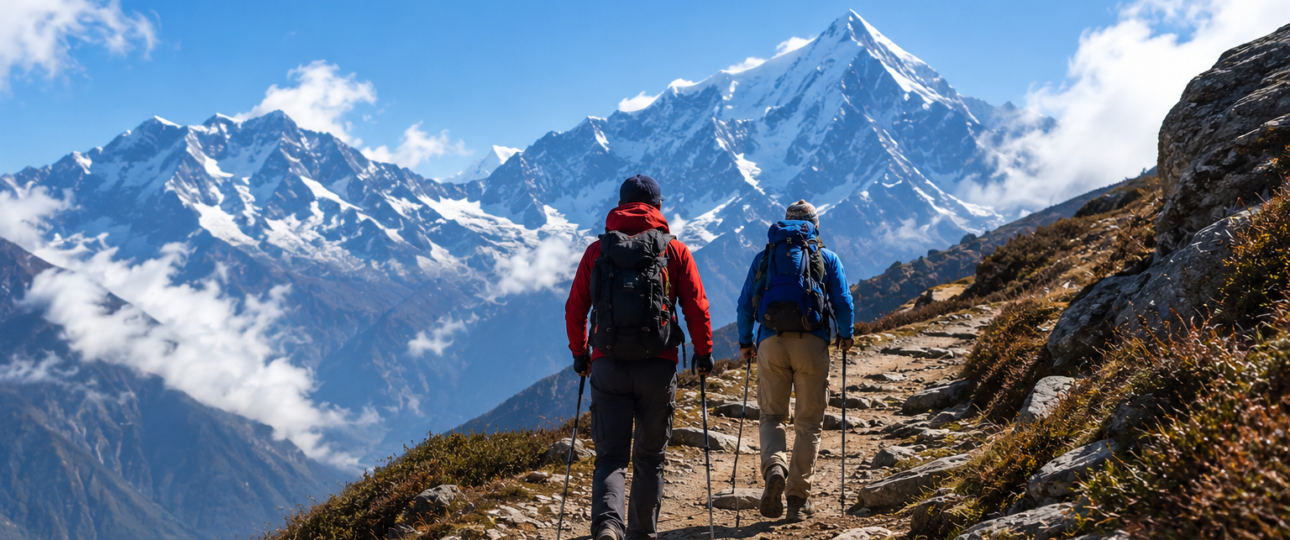
If you’re planning a trek in Nepal, you’ll almost certainly need a Nepal Trekking Permit before entering the trekking region. The exact permit requirements depend on where you’re trekking. Popular routes such as Annapurna Base Camp, Everest Base Camp, Langtang Valley, Manaslu, and Upper Mustang all have different permit rules and fee structures.
We regularly receive enquiries from travellers who have already booked flights to Kathmandu and started comparing trek packages, only to realise later that permits are a separate cost. In some trekking regions, the permit fee is minimal. In others, such as Upper Mustang, permits alone can cost more than an entire budget trek in Annapurna.
The reality is different. National park permits, conservation area permits, local municipality permits, and restricted area permits are designed to support conservation efforts, improve trekker safety, and regulate visitor numbers in sensitive regions.
In this guide, we’ll explain the latest Nepal trekking permit rules, permit fees, who needs them, and what Indian travellers should budget before booking a trek.
Do Indians Need a Nepal Trekking Permit?
Yes, Indian citizens need trekking permits for most trekking routes in Nepal, even though they do not require a visa to enter the country.
This is one of the most common misconceptions we hear from travellers. Since Indians can cross into Nepal using a valid passport or voter ID card, many assume they can simply start trekking after reaching Kathmandu or Pokhara. Unfortunately, that’s not how Nepal’s trekking regulations work.
Trekking permits are issued based on the region you plan to visit, not your nationality. Whether you’re an Indian traveller, a Nepali resident, or a visitor from another country, the permit requirements for protected trekking areas remain largely the same.
For example, if you’re planning an EBC Trek, you’ll need permits issued by local authorities and protected area management bodies. Similarly, trekkers heading towards Annapurna, Langtang, Manaslu, or Upper Mustang must obtain the required permits before entering those regions.
We recently assisted a group of travellers from Delhi who had booked their flights and hotels but were unaware of the permit requirements for the Annapurna region. They assumed permits could be purchased anywhere along the trail. While some permits can be arranged locally, arriving without the correct documentation can lead to delays, additional expenses, or even being denied entry at permit checkpoints.
The main purpose of a Nepal trekking permit is to:
- Track trekkers in remote regions.
- Support conservation and trail maintenance.
- Improve rescue coordination during emergencies.
- Protect environmentally sensitive areas.
- Regulate access to restricted border regions.
The good news is that obtaining permits is usually straightforward when your trek is properly planned. The key is understanding which permits apply to your chosen route before finalising your budget.
Types of Nepal Trekking Permits Explained
Nepal uses several different permit systems depending on the trekking region. Some treks require only one permit, while others require multiple permits issued by different authorities.
Before we discuss individual permit fees, here’s a quick overview:
| Permit Type | Purpose | Common Trekking Regions | Usually Required For |
| TIMS Card | Trekker registration and safety tracking | Various trekking regions | Selected trekking routes |
| Conservation Area Permit | Environmental conservation and trail maintenance | Annapurna, Manaslu and surrounding areas | Protected conservation zones |
| National Park Permit | Entry into national parks | Everest, Langtang, Rara and others | National park regions |
| Restricted Area Permit (RAP) | Controlled access to sensitive border regions | Upper Mustang, Upper Dolpo, Manaslu sections | Restricted trekking areas |
Let’s look at each permit in more detail.
TIMS Card (Trekkers’ Information Management System)
The TIMS Card was introduced to improve trekker safety and help authorities monitor visitor movements in remote regions. Many travellers still read older blogs mentioning TIMS requirements, which creates confusion because Nepal’s trekking regulations have changed over the years.
| TIMS Card Details | Information |
| Full Form | Trekkers’ Information Management System |
| Purpose | Trekker registration and emergency tracking |
| Issued By | Nepal tourism and trekking authorities |
| Required For | Depends on current trekking regulations and route |
| Documents Needed | Passport copy, photographs, application details |
Before applying, travellers should always verify the latest rules because some trekking regions now rely more heavily on local permits and guide registration systems.
National Park and Conservation Area Permits
Many of Nepal’s most famous trekking routes pass through protected national parks or conservation areas. These permits help fund conservation projects, wildlife protection, trail maintenance, waste management, and local community development.
| Permit Category | Popular Regions Covered |
| Annapurna Conservation Area Permit (ACAP) | Annapurna Base Camp, Annapurna Circuit |
| Sagarmatha National Park Permit | Everest Base Camp Region |
| Langtang National Park Permit | Langtang Valley Trek |
| Manaslu Conservation Area Permit | Manaslu Region |
| Rara National Park Permit | Rara Lake Trek |
A large percentage of the permit fees collected from trekkers are used to maintain trails and support local conservation efforts.
Restricted Area Permits (RAP)
Restricted Area Permits are required for Nepal’s most sensitive trekking regions, particularly areas close to international borders. These permits are more expensive and often have additional requirements.
| Restricted Region | Special Requirements |
| Upper Mustang | Restricted Area Permit mandatory |
| Upper Dolpo | Restricted Area Permit mandatory |
| Nar Phu Valley | Special permit required |
| Certain Manaslu Sections | Additional restricted area permit required |
In most restricted areas, trekkers cannot travel completely independently. Authorities generally require permits to be arranged through a registered trekking agency, and a licensed guide is often mandatory.
These are also the regions where permit fees can become a significant part of your overall trekking budget, which we’ll break down in the next section.
Nepal Trekking Permit Fees Structure (2026)
Permit fees vary significantly depending on the trekking region. While popular treks such as Annapurna and Langtang require relatively affordable permits, restricted regions like Upper Mustang and Upper Dolpo can add a substantial amount to your overall trekking budget.
The table below provides a practical overview of the permits most Indian travellers need for Nepal’s major trekking routes.
| Trekking Region | Permit Required | Approximate Fee (NPR) | Approximate Fee (INR)* |
| Annapurna Base Camp (ABC) | ACAP Permit | NPR 3,000 | ₹1,850–₹1,950 |
| Annapurna Circuit | ACAP Permit | NPR 3,000 | ₹1,850–₹1,950 |
| Everest Base Camp (EBC) | Sagarmatha National Park Permit + Khumbu Rural Municipality Permit | NPR 5,000 | ₹3,100–₹3,300 |
| Langtang Valley Trek | Langtang National Park Permit | NPR 3,000 | ₹1,850–₹1,950 |
| Mardi Himal Trek | ACAP Permit | NPR 3,000 | ₹1,850–₹1,950 |
| Ghorepani Poon Hill Trek | ACAP Permit | NPR 3,000 | ₹1,850–₹1,950 |
| Manaslu Circuit Trek | MCAP + ACAP + Restricted Area Permit | Varies by season | ₹10,000+ onwards |
| Nar Phu Valley Trek | ACAP + Restricted Area Permit | Varies by season | ₹12,000+ onwards |
| Upper Mustang Trek | Restricted Area Permit + ACAP | USD-based permit | ₹40,000+ onwards |
| Upper Dolpo Trek | Restricted Area Permit | USD-based permit | ₹55,000+ onwards |
*Fees are approximate and may change based on Nepal Government regulations and exchange rates.
What Most Trekkers Actually Pay
Looking only at permit fees can be misleading. Many first-time trekkers assume permit charges will be a major part of their trip cost. For standard treks such as Annapurna Base Camp, Langtang Valley, Mardi Himal, and Poon Hill, permits are usually one of the smallest expenses.
For example:
| Trek | Typical Trek Budget | Permit Cost Contribution |
| Annapurna Base Camp | ₹35,000 – ₹75,000 | Around 3–6% |
| Everest Base Camp | ₹75,000 – ₹1,50,000+ | Around 2–5% |
| Langtang Valley | ₹40,000 – ₹80,000 | Around 3–5% |
| Upper Mustang | ₹1,50,000 – ₹3,00,000+ | Can exceed 20% |
This is why we always advise travellers to look beyond permit fees and consider guides, accommodation, transportation, porter services, meals, and emergency support when comparing trekking costs.
Why Permit Costs Differ So Much
A common question we receive is: “Why does Annapurna cost only a few thousand rupees while Upper Mustang permits cost tens of thousands?”
The answer lies in visitor management.
Popular regions such as Annapurna and Langtang welcome large numbers of trekkers every year, allowing authorities to keep permit fees relatively affordable.
Restricted regions such as Upper Mustang and Upper Dolpo operate under controlled tourism policies. Higher permit fees help regulate visitor numbers, protect local culture, and preserve environmentally sensitive landscapes near international border areas.
As a result, permit costs increase dramatically in these restricted trekking zones.
Before You Budget for a Trek
Always check which permits are included in your trekking package. We’ve seen travellers compare two seemingly identical itineraries only to discover later that one package excludes permits, guide fees, or local municipality charges.
A package that appears cheaper at first glance may end up costing more once all mandatory permits are added.
In the next section, we’ll break down the exact permit costs for Nepal’s most popular trekking routes, including the EBC Trek and Annapurna Base Camp Trekking routes that Indian travellers book most frequently.
Permit Costs for Popular Treks
Not all trekking routes in Nepal require the same permits. The exact combination depends on the region, local regulations, and whether the trek passes through a national park, conservation area, or restricted zone.
Let’s break down the permit costs for the routes most frequently chosen by Indian travellers.
Everest Base Camp Trek Permit Cost
The EBC Trek remains Nepal’s most iconic trekking adventure. One of the first questions trekkers ask is how much they should budget for permits.
Currently, Everest Base Camp trekkers typically require:
| Permit | Approximate Fee (NPR) |
| Khumbu Pasang Lhamu Rural Municipality Permit | NPR 3,000 |
| Sagarmatha National Park Permit | NPR 3,000 |
| Total Permit Cost | NPR 6,000 |
Approximate total cost in Indian Rupees: ₹3,700–₹4,000
Many trekkers are surprised to learn that the old TIMS requirement commonly mentioned on older websites may not apply in the same way today. This is why checking the latest regulations before departure is essential.
For most travellers, permit fees represent only a small portion of the total Everest trekking budget. Flights to Lukla, accommodation, guides, and porter services generally account for a much larger share of expenses.
Annapurna Base Camp Trek Permit Cost
The ABC Trekking route is one of the best choices for Indian travellers looking for Himalayan views without the higher costs associated with Everest.
To enter the Annapurna region, trekkers generally need:
| Permit | Approximate Fee (NPR) |
| Annapurna Conservation Area Permit (ACAP) | NPR 3,000 |
| Total Permit Cost | NPR 3,000 |
Approximate total cost in Indian Rupees: ₹1,850–₹1,950
The Annapurna Conservation Area is Nepal’s largest protected area and covers several popular trekking routes, including Annapurna Base Camp, Annapurna Circuit, Mardi Himal, and Ghorepani Poon Hill.
We often find that first-time trekkers underestimate how affordable permit costs are in the Annapurna region compared to the overall trek experience.
Langtang Valley Trek Permit Cost
Langtang is becoming increasingly popular among travellers seeking quieter trails and shorter trekking durations.
For Langtang Valley Trek, trekkers typically require:
| Permit | Approximate Fee (NPR) |
| Langtang National Park Permit | NPR 3,000 |
| Total Permit Cost | NPR 3,000 |
Approximate total cost in Indian Rupees: ₹1,850–₹1,950
One advantage of Langtang is that permit requirements are relatively straightforward compared to some of Nepal’s more complex trekking regions.
Manaslu Circuit Trek Permit Cost
Manaslu is where permit planning becomes more complicated.
Unlike Annapurna or Langtang, the Manaslu Circuit requires multiple permits because portions of the trail pass through both conservation areas and restricted zones.
Typical permit requirements include:
| Permit | Approximate Cost |
| Manaslu Conservation Area Permit (MCAP) | Applicable |
| Annapurna Conservation Area Permit (ACAP) | Applicable |
| Restricted Area Permit (RAP) | Seasonal Pricing |
| Total Permit Budget | ₹10,000–₹20,000+ |
The final amount depends on:
- Travel season
- Number of trekking days within the restricted area
- Group size
- Current government regulations
A licensed guide is generally mandatory for Manaslu treks, and permits are usually arranged through registered trekking operators.
Upper Mustang Trek Permit Cost
Upper Mustang has one of the highest permit costs in Nepal.
| Permit | Approximate Cost |
| Restricted Area Permit | USD-based |
| ACAP Permit | Additional |
| Typical Permit Budget | ₹40,000+ |
The high permit fee is intentional. Nepal limits visitor numbers to help preserve the region’s unique Tibetan-influenced culture, fragile landscapes, and historic monasteries.
For travellers considering Upper Mustang, permit costs should be factored into the overall trek budget from the beginning rather than treated as an additional expense later.
Quick Comparison of Popular Trek Permit Costs
| Trek | Approximate Permit Budget |
| Annapurna Base Camp | ₹1,850–₹1,950 |
| Langtang Valley | ₹1,850–₹1,950 |
| Everest Base Camp | ₹3,700–₹4,000 |
| Manaslu Circuit | ₹10,000–₹20,000+ |
| Upper Mustang | ₹40,000+ |
As you can see, permit costs vary dramatically between regions. For standard treks such as Annapurna, Langtang, and Everest, permits are relatively affordable. For restricted areas, permit fees become a major component of the overall trip cost.
The next question most travellers ask is whether they can arrange these permits themselves or if they need to go through a trekking agency.
Do Nepali Citizens Also Pay Trekking Permit Fees?
This is a question we frequently receive from Indian travellers planning a Nepal trek.
The answer depends on the permit type.
| Permit Type | Nepali Citizens | Foreign Trekkers (Including Indians) |
| National Park Permits | Often discounted or exempt in some cases | Pay standard tourist fee |
| Conservation Area Permits (ACAP, MCAP) | Different local rules may apply | Pay standard permit fee |
| Restricted Area Permits | Generally not applicable in the same way | Mandatory for foreign trekkers |
| Local Municipality Permits | May vary by region | Usually mandatory where applicable |
In practice, Nepali citizens do not usually face the same permit costs as international trekkers. Many permit systems are specifically designed for foreign visitors entering protected trekking regions.
Indian travellers should therefore budget based on the official foreign trekker permit rates rather than comparing costs with local residents, guides, porters, or Nepali trekking companions.
A situation we occasionally encounter is a mixed group where Nepali friends and Indian travellers trek together. The Nepali members may not need the same permits or may pay significantly lower fees, while Indian trekkers must still carry the required permits and identification documents at checkpoint inspections.
For budgeting purposes, always assume that the published foreign trekker fee applies unless the permit authority specifically states otherwise.
Can You Get Nepal Trekking Permits Yourself?
Yes, for many trekking routes in Nepal, you can obtain permits yourself without booking a complete trekking package. However, the process depends on the trekking region and current regulations.
For popular routes such as Annapurna Base Camp, Langtang Valley, Mardi Himal, and some Everest region treks, permits can often be arranged through the relevant permit offices in Kathmandu or Pokhara.
That said, many travellers choose to have permits arranged by their trekking agency to avoid paperwork, queues, and last-minute confusion.
Documents Typically Required
Before applying for a Nepal trekking permit, keep the following documents ready:
| Required Document | Purpose |
| Passport | Identity verification |
| Passport-size Photographs | Permit application records |
| Nepal Entry Stamp (if applicable) | Entry confirmation |
| Trekking Itinerary | Route verification |
| Guide Details (where required) | Compliance with trekking regulations |
| Permit Application Form | Official registration |
For Indian travellers entering Nepal with a valid passport, carrying the same passport used during entry is strongly recommended when applying for trekking permits.
Where Can You Apply for Trekking Permits?
| Location | Permits Commonly Issued |
| Kathmandu | Most national park, conservation area and restricted area permits |
| Pokhara | Annapurna region permits |
| Trekking Agencies | Permit processing assistance |
| Local Authorities | Certain municipality permits |
The process is generally straightforward, but requirements can change based on government regulations and trekking region policies.
When You Must Use a Registered Trekking Agency
Not every trek allows completely independent permit applications.
For several restricted regions, permits can only be obtained through a licensed trekking agency.
Examples include:
| Trekking Region | Agency Required? |
| Upper Mustang | Yes |
| Upper Dolpo | Yes |
| Nar Phu Valley | Usually Yes |
| Manaslu Circuit | Yes |
| Tsum Valley | Yes |
In these areas, authorities often require:
- A registered trekking operator
- A licensed guide
- Minimum group requirements (where applicable)
- Advance permit approval
Attempting to organise these permits independently is usually not possible.
Common Permit Mistakes We See Travellers Make
After assisting many trekkers heading to Nepal, a few issues come up repeatedly.
Assuming Permits Are Included
Not every trek package includes permit costs. Always ask for a detailed inclusion list before booking.
Carrying Incorrect Documents
We’ve seen travellers arrive with photocopies only to discover original identification is required during permit verification.
Relying on Outdated Blogs
Nepal’s trekking regulations change periodically. Articles written several years ago may mention permit rules that are no longer applicable.
Leaving Permits Until the Last Minute
During peak trekking seasons, permit offices can become busy. Processing permits in advance helps avoid unnecessary delays.
Is It Better to Arrange Permits Yourself or Through an Agency?
For standard treks such as Annapurna Base Camp, Langtang Valley, and some Everest itineraries, experienced travellers often arrange permits independently.
However, many Indian travellers prefer agency assistance because it simplifies the process and ensures all paperwork is completed correctly.
In our experience, the biggest advantage isn’t saving money—it’s avoiding mistakes that could affect your trek after you’ve already travelled all the way to Nepal.
The next thing every trekker should understand is the latest trekking regulations, especially the guide requirements and safety rules that have changed in recent years.
New Nepal Trekking Rules Indian Travellers Should Know
Nepal’s trekking rules have changed significantly over the past few years, mainly to improve trekker safety and reduce incidents involving lost or stranded hikers in remote mountain regions.
If you’re planning a trek in 2026, don’t rely on information from old blogs or YouTube videos. Some of the advice that was accurate a few years ago may no longer apply.
Are Solo Treks Allowed in Nepal?
This is one of the most searched questions related to Nepal trekking permits.
The short answer is: it depends on the trekking region and the latest regulations in force at the time of travel.
In recent years, Nepal introduced stricter rules encouraging trekkers to use licensed guides in many trekking regions. The decision was largely driven by safety concerns, rescue operations, and better trekker tracking.
Before booking flights or accommodation, always verify the latest requirements for your specific route.
| Trekking Type | Current Situation |
| Guided Trek | Recommended and often required |
| Independent Trekking | Rules vary by region |
| Restricted Area Treks | Licensed guide mandatory |
| Group Treks | Commonly accepted across regions |
Because regulations can change, checking with a registered trekking operator before departure is always advisable.
Why Nepal Introduced Stricter Trekking Regulations
Many travellers initially assume these rules are simply another fee-generating measure. In reality, the changes were largely introduced due to safety concerns.
Every year, rescue teams respond to situations involving:
- Trekkers getting lost on remote trails
- Altitude sickness emergencies
- Sudden weather changes
- Injuries in isolated regions
- Communication difficulties during emergencies
A registered guide provides an additional layer of safety, especially for first-time trekkers unfamiliar with Himalayan conditions.
We’ve spoken with travellers who planned to trek independently after watching videos online, only to realise once they arrived that weather conditions, route diversions, and altitude challenges were far more demanding than expected.
Guide Requirements for Restricted Areas
For restricted trekking regions, guides are generally not optional.
| Trekking Region | Licensed Guide Required |
| Upper Mustang | Yes |
| Manaslu Circuit | Yes |
| Tsum Valley | Yes |
| Upper Dolpo | Yes |
| Nar Phu Valley | Yes |
In most cases, permits for these regions cannot even be processed without guide details and agency involvement.
Carry Your Permits at All Times
Permit checks are common throughout Nepal’s trekking regions.
During your trek, local authorities may request:
- Passport
- Permit documents
- Guide information (if applicable)
- Trekking itinerary
Checkpoint inspections are routine and help authorities maintain accurate records of trekkers in the region.
Digital copies can be useful, but physical copies are strongly recommended.
Rescue and Emergency Considerations
One reason Nepal continues to strengthen trekking regulations is the increasing number of rescue operations each year.
If a rescue becomes necessary due to:
- Altitude sickness
- Injury
- Severe weather
- Medical emergency
Authorities often need accurate permit and registration information to coordinate assistance quickly.
This is another reason permit compliance should never be treated as a formality.
What Indian Travellers Should Do Before Booking
Before confirming your trek:
- Verify the latest permit requirements.
- Confirm whether a guide is mandatory.
- Check if permits are included in your package cost.
- Carry valid identification documents.
- Keep physical and digital copies of all permits.
- Confirm rescue and emergency support arrangements.
Many travellers spend weeks comparing hotel prices and flight options but only look into permit regulations a few days before departure. A little preparation beforehand can save considerable time and stress once you arrive in Nepal.
The good news is that for most popular trekking routes, the process is straightforward when planned properly. The next step is understanding how permit costs fit into your overall trekking budget and what you should realistically expect to spend.
How Much Should You Budget for Permits in Your Trek Cost?
One mistake many first-time trekkers make is focusing only on permit fees while ignoring the bigger expenses involved in a Nepal trek.
In reality, permits are usually a small part of your overall budget for standard trekking routes. Flights, accommodation, transportation, guide services, meals, and travel insurance often have a much bigger impact on the final cost.
Permit Cost vs Total Trek Cost
Here’s a practical comparison based on what Indian travellers typically spend:
| Trek | Typical Total Budget | Permit Cost | Permit Share of Budget |
| Annapurna Base Camp | ₹35,000 – ₹75,000 | ₹1,850 – ₹1,950 | 3–6% |
| Langtang Valley | ₹40,000 – ₹80,000 | ₹1,850 – ₹1,950 | 2–5% |
| Everest Base Camp | ₹75,000 – ₹1,50,000+ | ₹3,700 – ₹4,000 | 2–5% |
| Manaslu Circuit | ₹90,000 – ₹2,00,000+ | ₹10,000 – ₹20,000+ | 8–15% |
| Upper Mustang | ₹1,50,000 – ₹3,00,000+ | ₹40,000+ | 15–25% |
As you can see, permit fees are rarely the deciding factor for popular treks like Annapurna or Everest. However, for restricted areas such as Upper Mustang and Upper Dolpo, permit costs become a major part of the overall trip budget.
A Real Example
Let’s take a traveller planning an Annapurna Base Camp trek.
Their estimated expenses might look like this:
| Expense | Approximate Cost |
| India to Nepal Flights | ₹15,000 – ₹30,000 |
| Hotels in Kathmandu/Pokhara | ₹5,000 – ₹12,000 |
| Trek Accommodation & Meals | ₹10,000 – ₹20,000 |
| Guide & Support Services | ₹8,000 – ₹20,000 |
| ACAP Permit | ₹1,850 – ₹1,950 |
| Miscellaneous Expenses | ₹5,000+ |
In this scenario, the permit is one of the smallest expenses, yet it is one of the most important because you cannot legally enter the trekking region without it.
What’s Usually Included in Trek Packages?
If you’re booking through trekking operators or browsing Nepal travel packages, always check exactly what is included.
Some packages include:
- All trekking permits
- Guide services
- Airport transfers
- Accommodation
- Domestic transportation
- Trek support
Others may advertise a lower starting price but exclude permits, guide fees, porter services, or local transportation.
This is why comparing package prices alone can sometimes be misleading.
Cheapest Isn’t Always Cheapest
We’ve seen travellers choose a cheaper trek package only to discover later that they still need to pay separately for:
- Conservation area permits
- National park permits
- Municipality permits
- Guide fees
- Porter charges
- Domestic flights
A package that appears ₹5,000 cheaper upfront can end up costing more after mandatory expenses are added.
Budgeting Tips for Indian Travellers
Before confirming any trek, we recommend:
- Asking for a complete cost breakdown.
- Confirming which permits are included.
- Checking if guide services are mandatory.
- Keeping a small contingency budget for permit changes or local fees.
- Verifying the latest trekking regulations before departure.
A properly planned trek budget should account for all required permits from the beginning rather than treating them as an afterthought. Doing so helps avoid surprises and makes it much easier to compare different trekking options fairly.
Before finalising your itinerary, it also helps to understand Nepal’s major trekking regions, travel routes, and practical trip planning information.
Planning Your Trek? Check These Nepal Resources
A successful Nepal trek starts long before you reach the trailhead. Understanding the destination, transportation options, weather conditions, and regional highlights can help you choose the right trek and avoid unnecessary expenses.
If you’re still deciding which region suits you best, our detailed Nepal Tourism Guide covers everything from travel seasons and cultural experiences to adventure activities and practical travel tips.
Many trekkers also combine their trekking itinerary with sightseeing. Before finalising your route, it’s worth exploring some of the most popular places to visit in Nepal, including Kathmandu, Pokhara, Chitwan National Park, Lumbini, and Bhaktapur.
For first-time international travellers, understanding how to reach Nepal from India can also simplify planning. Depending on your departure city, Nepal can be reached by direct flights, connecting flights, train and road combinations, or overland border crossings.
The key is choosing a trekking route that matches your fitness level, available time, and budget. While Everest and Annapurna remain the most popular choices, Nepal offers dozens of lesser-known trekking experiences that are equally rewarding and often less crowded.
Frequently Asked Questions About Nepal Trekking Permits
1. Do Indian citizens need a Nepal trekking permit?
Yes. Although Indian citizens do not require a visa to enter Nepal, trekking permits are still required for most trekking regions, including Annapurna, Everest, Langtang, Manaslu, and Upper Mustang.
2. Is the TIMS Card mandatory for all treks in Nepal?
Not necessarily. Permit requirements have changed over time, and some trekking regions now rely on local permits and guide registration systems. Always verify the latest rules before your trip.
3. How much does an Everest Base Camp trekking permit cost?
Most trekkers heading to Everest Base Camp need the Khumbu Rural Municipality Permit and the Sagarmatha National Park Permit. Combined, these typically cost around NPR 6,000.
4. Can I trek in Nepal without a guide?
This depends on the trekking region and current regulations. Restricted regions such as Manaslu, Upper Mustang, Tsum Valley, and Upper Dolpo require a licensed guide and agency-arranged permits.
5. Which Nepal trek has the highest permit fees?
Upper Mustang and Upper Dolpo are among the most expensive trekking regions in Nepal due to restricted area permit requirements and controlled tourism policies.
6. Are trekking permit fees refundable?
In most cases, trekking permit fees are non-refundable once issued. Travellers should verify dates and trekking plans carefully before applying.
7. Can trekking permits be purchased online?
Some permit processes have become more streamlined, but many permits are still issued through permit offices or registered trekking agencies. Availability depends on the trekking region.
8. Do Nepali citizens also pay trekking permit fees?
Permit requirements for Nepali citizens differ from those for foreign trekkers. Many permit systems are designed specifically for international visitors, and local residents may be exempt or subject to different fee structures depending on the region.
9. Are trekking permits included in trekking packages?
Not always. Some trekking operators include all permits in the package price, while others charge them separately. Always ask for a detailed inclusion list before booking.
10. What happens if I trek without the required permit?
Authorities can stop trekkers at checkpoints, issue penalties, deny access to protected areas, or require permits to be obtained before continuing the trek.