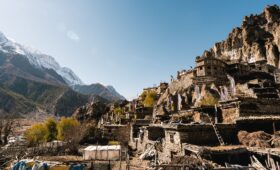
If you’re looking for a Himalayan trek that offers snow-covered peaks, traditional Nepalese villages, dense forests, glacier views, and a chance to stand beneath an 8,000-meter mountain without technical climbing, the Annapurna Base Camp Trek is one of the best options in Nepal.
Unlike Everest Base Camp, this trek is shorter, more affordable, and suitable for many first-time high-altitude trekkers who prepare properly. Over 9 days, you’ll walk through Gurung villages, rhododendron forests, bamboo trails, natural hot springs, and finally reach Annapurna Base Camp at 4,130 meters surrounded by some of the highest mountains in the world.
Many Indian trekkers combine this journey with other Nepal Tour Packages, but for adventure lovers, Annapurna Base Camp remains the highlight of any Nepal visit.
Annapurna Base Camp Trek Overview
| Trek Details | Information |
| Trek Name | Annapurna Base Camp Trek |
| Country | Nepal |
| Region | Annapurna Conservation Area |
| Trek Duration | 9 Days |
| Base Camp Altitude | 4,130 m (13,550 ft) |
| Difficulty Level | Moderate |
| Trek Grade | Moderate to Challenging |
| Trail Type | Tea House Trek |
| Total Trek Distance | Approx. 75-80 km |
| Starting Point | Pokhara |
| Ending Point | Pokhara |
| Nearest Airport | Pokhara Airport |
| Best Seasons | Spring & Autumn |
| Best Months | March-May, September-November |
| Accommodation | Hotel + Tea Houses |
| Food Availability | Nepalese, Indian, Continental Meals |
| Major Attraction | Annapurna I, Machhapuchhre, Annapurna Sanctuary |
| Suitable For | Beginners with Good Fitness & Experienced Trekkers |
| Minimum Age | 12 Years |
| Permit Required | Yes |
| Maximum Altitude Gain | 4,130 m |
| Trek Style | Guided Group & Fixed Departure |
Annapurna Base Camp Trek Cost From India
One of the most common questions we receive from trekkers is, “How much does the Annapurna Base Camp Trek cost from India?” The overall cost depends on the season, accommodation category, transportation preferences, porter requirements, and the services included in your package.
Approximate Trek Cost
| Package Type | Approximate Cost Per Person |
| Budget Trek | ₹22,000 – ₹28,000 |
| Standard Trek | ₹28,000 – ₹55,000 |
| Premium Trek | ₹55,000 – ₹90,000+ |
Additional Expenses to Consider
- Travel from India to Nepal
- Travel insurance
- Porter charges (if required)
- Personal expenses
- Hot showers, Wi-Fi, and charging facilities
- Emergency evacuation (if required)
For most Indian trekkers, the total trip budget including transportation and personal expenses generally falls between ₹35,000 and ₹70,000 depending on travel style.
Why is the Annapurna Base Camp Trek a Must-Do Trek?
Many trekkers compare different Nepal trekking routes before booking. In our experience, Annapurna Base Camp offers one of the most complete trekking experiences in the Himalayas because it combines mountain views, local culture, forests, and high-altitude adventure in a relatively short duration.
Here is why trekkers love the Annapurna Base Camp Trek:
- Stand at the base of Annapurna I (8,091 m), the 10th highest mountain in the world.
- Witness a spectacular 360-degree mountain amphitheatre at Annapurna Base Camp.
- Experience breathtaking views of Machhapuchhre (Fishtail Mountain).
- Trek through traditional Gurung villages and learn about local mountain culture.
- Walk through dense rhododendron, oak, and bamboo forests.
- Enjoy comfortable tea-house accommodation throughout the trek.
- Relax in the famous natural hot springs at Jhinu Danda after days of trekking.
- Suitable for first-time Himalayan trekkers who have prepared physically.
- Less crowded than many popular Himalayan trekking routes.
- Explore the protected Annapurna Conservation Area.
- Witness unforgettable Himalayan sunrises and sunsets.
- Reach a high-altitude base camp without requiring technical mountaineering skills.
One thing many of our guests mention after returning is how dramatically the scenery changes each day. You begin among rice terraces and villages, then gradually move into forests, alpine terrain, glaciers, and finally into the heart of the Annapurna Sanctuary surrounded by giant snow-covered peaks.
Annapurna Base Camp Trek – The Ultimate Himalayan Journey
The Annapurna Base Camp Trek is not just about reaching a destination. It is about watching the Himalayas slowly reveal themselves with every step. From the moment you leave Pokhara behind, the landscape keeps changing — terraced farms become traditional villages, villages give way to forests, forests open into alpine valleys, and eventually you find yourself standing beneath some of the highest mountains on Earth.
For many Indian trekkers, this is their first experience above 4,000 metres. Unlike several high-altitude expeditions that require technical climbing skills, Annapurna Base Camp allows ordinary adventure lovers to experience the grandeur of the Himalayas through a well-established trekking route supported by tea houses and local communities.
One reason this trek remains so popular is the variety it offers. On a single journey, you’ll walk through charming Gurung settlements, cross suspension bridges over roaring rivers, pass through dense bamboo forests, and witness changing vegetation zones as altitude increases. Every day feels different from the previous one.
The biggest reward comes when you enter the Annapurna Sanctuary. Surrounded by massive snow-covered peaks on all sides, trekkers often describe this moment as one of the most unforgettable experiences of their lives. Annapurna I, Annapurna South, Hiunchuli, Gangapurna, Gandharvachuli, and the iconic Machhapuchhre create a natural amphitheatre that cannot be fully captured in photographs.
Another reason trekkers choose this route is accessibility. Compared to many remote Himalayan expeditions, reaching the starting point is relatively straightforward. Pokhara serves as the main gateway for the trek and is well connected to Kathmandu by both road and air.
The trek also offers a balance between adventure and comfort. Accommodation is available in tea houses throughout the route, meals are freshly prepared, and the trail infrastructure is well developed. While good fitness is necessary, this trek is achievable for first-time trekkers who train properly before arrival.
Many guests who initially book the trek simply for the mountain views return talking about something entirely different — the warmth of local villages, conversations with fellow trekkers, unforgettable sunrises, and the feeling of accomplishment that comes from reaching Annapurna Base Camp after days of effort.
This combination of culture, scenery, challenge, and achievement is exactly what makes the Annapurna Base Camp Trek one of Nepal’s most rewarding trekking adventures.
Major Attractions of Annapurna Base Camp Trek
Mount Annapurna I (8,091 m)
Standing at Annapurna Base Camp gives you a rare opportunity to witness the mighty Annapurna I from incredibly close range. As the 10th highest mountain in the world, its massive glacier-covered face dominates the skyline and creates one of the most dramatic mountain settings in the Himalayas.
Mount Machhapuchhre (Fishtail Mountain)
One of Nepal’s most sacred peaks, Machhapuchhre is famous for its distinctive fishtail-shaped summit. The mountain remains unclimbed due to its religious significance and becomes visible throughout much of the trek, especially from Ghandruk, Chhomrong, Machhapuchhre Base Camp, and Annapurna Base Camp.
Panoramic Himalayan Mountain Views
Throughout the trek, you’ll witness spectacular views of Annapurna South, Hiunchuli, Gangapurna, Annapurna III, Gandharvachuli, and several surrounding peaks. Sunrise and sunset paint these mountains in shades of gold, orange, and pink, creating unforgettable photography opportunities.
Natural Hot Springs at Jhinu Danda
After days of continuous trekking, the natural hot springs at Jhinu Danda feel like a reward. Located beside the Modi Khola River, these warm mineral-rich pools provide a perfect opportunity to relax tired muscles while enjoying the peaceful mountain surroundings.
Annapurna Conservation Area
The trek passes through Nepal’s largest protected conservation area. Rich biodiversity, rhododendron forests, bamboo groves, waterfalls, rare bird species, and traditional mountain villages make this region much more than a mountain trek. Every day offers a new landscape and ecosystem to explore.
Annapurna Base Camp Trek Difficulty
The Annapurna Base Camp Trek is considered a moderate trek. It does not require technical climbing experience, but trekkers should be prepared for multiple days of walking, steep stone staircases, and high-altitude conditions.
Difficulty Overview
| Factor | Difficulty Level |
| Trail Condition | Moderate |
| Altitude | Moderate |
| Physical Endurance | Moderate |
| Technical Climbing | Not Required |
| Suitable for Beginners | Yes (With Preparation) |
The biggest challenge on this trek is not the altitude itself but the continuous ascents and descents. Some days involve 6-8 hours of trekking, including thousands of stone steps through villages and forests.
With proper fitness preparation and acclimatization, first-time trekkers can comfortably complete the Annapurna Base Camp Trek.
Annapurna Base Camp Trek Altitude Chart
Understanding the altitude profile helps trekkers prepare mentally and physically for the journey.
| Location | Altitude |
| Pokhara | 825 m |
| Klue | 1,300 m |
| Ghandruk | 2,000 m |
| Chhomrong | 2,200 m |
| Bamboo | 2,300 m |
| Deurali | 3,200 m |
| Machhapuchhre Base Camp | 3,700 m |
| Annapurna Base Camp | 4,130 m |
| Jhinu Danda | 1,700 m |
The gradual ascent profile is one of the reasons why the Annapurna Base Camp Trek is considered achievable for fit beginners.
Best Time to Do Annapurna Base Camp Trek
The best time to do the Annapurna Base Camp Trek is during Spring (March to May) and Autumn (September to November). These months offer the most stable weather, clear mountain views, comfortable temperatures, and excellent trekking conditions.
During spring, the trail comes alive with blooming rhododendron forests, lush greenery, and pleasant daytime temperatures. Autumn, on the other hand, is famous for crystal-clear Himalayan views after the monsoon season, making it the most preferred time for photography and mountain scenery.
While the trek is possible during winter, temperatures near the base camp can drop below freezing. Monsoon months usually bring rainfall, slippery trails, and reduced visibility, making them less suitable for most trekkers.
Recommended Trekking Season
| Season | Months | Conditions |
| Spring | March – May | Blooming forests, pleasant weather, excellent views |
| Autumn | September – November | Clear skies, stable weather, best mountain visibility |
| Winter | December – February | Cold temperatures, fewer crowds |
| Monsoon | June – August | Rainfall, slippery trails, limited views |
Safety on the Annapurna Base Camp Trek
Your safety is our highest priority. Our trek leaders and local guides continuously monitor weather conditions, trail conditions, and trekkers’ health throughout the journey. We maintain proper acclimatization schedules, carry essential first-aid equipment, oxygen support, and emergency communication systems to handle unexpected situations. With experienced guides, well-planned logistics, and established safety protocols, you can focus on enjoying the trek while our team takes care of the operational and safety aspects.
Annapurna Base Camp Trek Itinerary (9 Days)
This 9-day itinerary is designed to provide a gradual ascent, proper acclimatization, and enough time to enjoy the incredible landscapes of the Annapurna region. Distances and trekking hours are approximate and may vary depending on weather conditions, trail conditions, and individual walking pace.
Day 1: Arrival in Pokhara
Trek Overview
- Altitude: 825 m / 2,700 ft
- Stay: Hotel in Pokhara
- Check-in: After 12:00 PM
- Activities: Trek briefing and optional sightseeing
After arriving in Pokhara, you’ll immediately notice why it is considered Nepal’s adventure capital. Surrounded by lakes, hills, and snow-capped Himalayan peaks, the city serves as the gateway to the Annapurna region.
Most trekkers spend the day relaxing after their journey and exploring nearby attractions. Popular places include Phewa Lake, Tal Barahi Temple, Lakeside Market, and the International Mountain Museum. On clear days, you can enjoy stunning views of the Annapurna and Machhapuchhre ranges directly from the city.
In the evening, our trek leader conducts a detailed briefing covering the route, weather expectations, safety guidelines, equipment checks, and important information for the upcoming days. Since the real adventure begins tomorrow, an early dinner and good rest are highly recommended.
Day 2: Pokhara to Klue Drive & Trek to Ghandruk
Trek Overview
- Altitude (Klue): 1,300 m / 4,300 ft
- Altitude (Ghandruk): 2,000 m / 6,500 ft
- Drive Distance: 48 km
- Drive Duration: Approximately 2 Hours
- Trek Distance: 7 km
- Trek Duration: 4-5 Hours
- Stay: Tea House
- Meals: Breakfast, Lunch & Dinner
- Water Availability: Villages and tea houses
After breakfast, we leave Pokhara and drive towards Klue, the starting point of our trek. The scenic drive passes through traditional Nepalese villages, terraced farms, and river valleys.
The trek begins with a gradual ascent through stone-paved trails and charming settlements. Along the way, you’ll cross the Bhurungdi River and complete the required registration formalities for the trek. This is where the local authorities verify your trekking documents and permits.
As the trail climbs steadily, the first major Himalayan views begin to appear. Peaks such as Annapurna South, Hiunchuli, Gangapurna, and Machhapuchhre often dominate the skyline on clear days.
Ghandruk is one of the most beautiful and culturally rich villages in the Annapurna region. Known for its traditional stone houses and Gurung heritage, the village offers a perfect introduction to mountain life in Nepal. In the evening, you may visit the Old Gurung Museum and enjoy spectacular sunset views over the surrounding peaks.
Day 3: Ghandruk to Chhomrong
Trek Overview
- Altitude: 2,200 m / 7,200 ft
- Trek Distance: 10 km
- Trek Duration: 6-7 Hours
- Stay: Tea House
- Meals: Breakfast, Lunch & Dinner
- Water Availability: Tea Houses Along the Route
- Highlights: Himalayan Views & Sunset Point
Today’s trail introduces trekkers to the classic terrain of the Annapurna Sanctuary. The route begins with a descent towards Kimrong Khola before gradually climbing through forests and mountain villages.
Throughout the day, you’ll enjoy increasingly impressive views of Annapurna South, Gangapurna, Hiunchuli, and the famous Fishtail Mountain. The combination of terraced fields, rhododendron forests, and distant snow-covered peaks makes this one of the most scenic days of the trek.
The final climb to Chhomrong requires patience, but the reward is worth the effort. Located on a ridge overlooking the valley, Chhomrong is considered the gateway to the Annapurna Sanctuary.
It is also the last major market area before entering the more remote sections of the trek. Trekkers often use this opportunity to purchase snacks, batteries, toiletries, and other essentials before heading deeper into the mountains.
As evening approaches, watch the sunset cast golden hues across the Annapurna range before settling into your tea house for the night.
Day 4: Chhomrong to Bamboo
Trek Overview
- Altitude: 2,300 m / 7,600 ft
- Trek Distance: 10 km
- Trek Duration: 5-6 Hours
- Stay: Tea House
- Meals: Breakfast, Lunch & Dinner
- Water Availability: Tea Houses on the Route
- Highlights: Dense Forest Trails & Annapurna Sanctuary Entrance
The day begins with a steep descent along nearly 2,500 stone steps towards Chhomrong Khola. After crossing a suspension bridge, the trail climbs again towards Sinuwa through thick forest cover.
As you move deeper into the Annapurna Conservation Area, the landscape changes noticeably. Dense forests of rhododendron, oak, bamboo, and alpine vegetation surround the trail, creating a peaceful atmosphere far removed from villages and roads.
Beyond Sinuwa, you’ll notice fewer settlements and more wilderness. This section marks the transition into the inner sanctuary region where porters become the primary mode of transporting supplies.
The final section descends gradually through forested paths before reaching Bamboo. Although mountain views are limited here due to dense vegetation, the quiet surroundings and towering bamboo groves create a unique trekking experience.
Bamboo serves as a comfortable overnight stop before the higher-altitude sections of the trek begin.
Day 5: Bamboo to Deurali
Trek Overview
- Altitude: 3,200 m / 10,550 ft
- Trek Distance: 9 km
- Trek Duration: 5-6 Hours
- Stay: Tea House
- Meals: Breakfast, Lunch & Dinner
- Water Availability: Tea Houses Along the Route
- Highlights: Dovan, Himalaya Village, Hinku Cave, First High-Altitude Landscapes
Today marks the beginning of the higher-altitude section of the Annapurna Base Camp Trek. As you leave Bamboo behind, the trail gradually climbs through dense forests towards Dovan and Himalaya Village.
The vegetation begins to change noticeably as altitude increases. Thick bamboo forests slowly give way to alpine terrain, while the views become more dramatic with every hour of trekking. Along the route, you’ll cross wooden bridges, mountain streams, and sections surrounded by towering cliffs.
One of the notable landmarks today is the famous Hinku Cave area. Although the cave itself is no longer accessible, the surrounding landscape provides a fascinating glimpse into the rugged terrain of the Annapurna Sanctuary.
Beyond Himalaya Village, the trail becomes more open and rocky. Several avalanche-prone sections are crossed carefully under the guidance of the trek leader. The final climb towards Deurali rewards trekkers with magnificent views of Machhapuchhre, Gangapurna, and Annapurna III.
Deurali is a small settlement surrounded by dramatic mountain scenery and serves as an important acclimatization point before moving higher towards the base camp region.
Day 6: Deurali to Annapurna Base Camp via Machhapuchhre Base Camp
Trek Overview
- Altitude (Machhapuchhre Base Camp): 3,700 m / 12,200 ft
- Altitude (Annapurna Base Camp): 4,130 m / 13,550 ft
- Trek Distance: 8 km
- Trek Duration: 6 Hours
- Stay: Tea House at Annapurna Base Camp
- Meals: Breakfast, Lunch & Dinner
- Water Availability: Tea Houses Along the Route
- Highlights: Machhapuchhre Base Camp, Annapurna Sanctuary, 360° Himalayan Views
This is undoubtedly the most anticipated day of the trek.
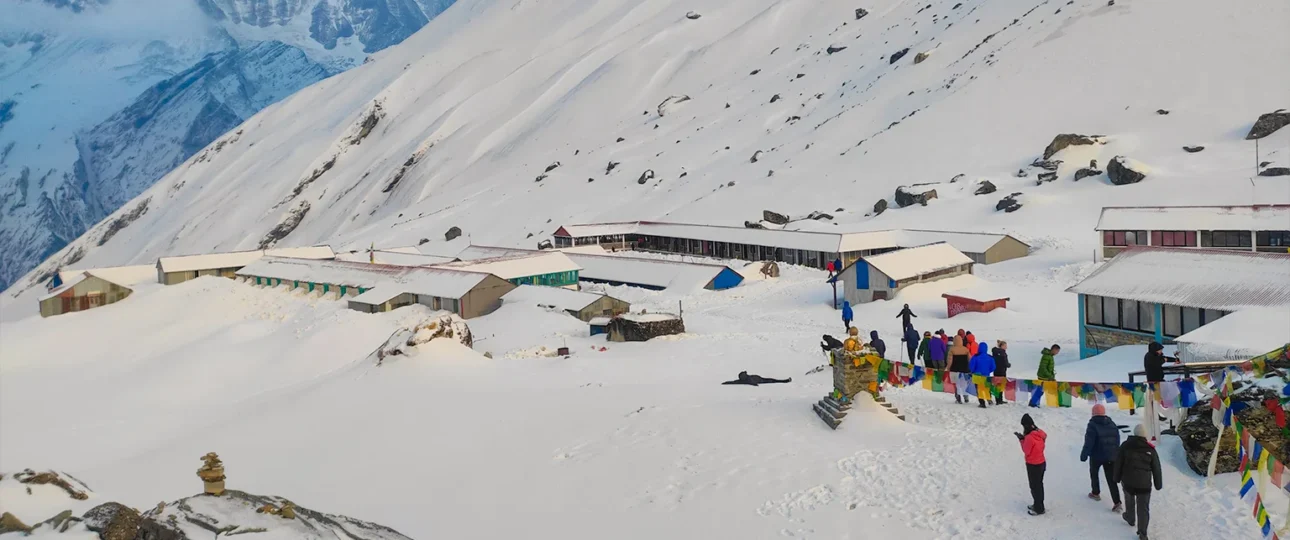
The trail leaves Deurali and enters a spectacular high-altitude valley carved by glaciers over thousands of years. The forest line disappears completely, replaced by rocky terrain, snow-covered slopes, and towering Himalayan peaks.
After a steady ascent, you’ll reach Machhapuchhre Base Camp (MBC). Despite its name, climbing Mount Machhapuchhre is prohibited due to its religious significance in Nepal. The views from MBC are extraordinary, with Annapurna South, Hiunchuli, Gangapurna, Annapurna III, and Machhapuchhre surrounding the valley.
Following lunch and a short break, the trail continues towards Annapurna Base Camp. As you gain altitude, the landscape becomes increasingly dramatic. Massive glaciers, snowfields, and towering peaks dominate every direction.
Reaching Annapurna Base Camp is a moment most trekkers never forget. Situated at 4,130 metres, the camp is completely surrounded by Himalayan giants, including Annapurna I (8,091 m), creating a natural amphitheatre unlike anywhere else in the world.
As evening approaches, enjoy one of the finest mountain sunsets in Nepal before spending the night beneath the towering Annapurna massif.
Day 7: Annapurna Base Camp to Bamboo
Trek Overview
- Altitude: 2,300 m / 7,600 ft
- Trek Distance: 13 km
- Trek Duration: 8-9 Hours
- Stay: Tea House
- Meals: Breakfast, Lunch & Dinner
- Water Availability: Tea Houses Along the Route
- Highlights: Sunrise at ABC, Descending Through Annapurna Sanctuary
Wake up early today because the sunrise at Annapurna Base Camp is one of the highlights of the entire journey.
As the first rays of sunlight touch Annapurna I, Machhapuchhre, Hiunchuli, and surrounding peaks, the mountains transform into shades of gold and orange. Many trekkers consider this sunrise alone worth the effort of reaching base camp.
After breakfast, begin the descent towards Bamboo. The route retraces the same trail through Machhapuchhre Base Camp, Deurali, Himalaya, and Dovan.
Although the day is long, descending is generally easier than climbing. The lower altitude also helps trekkers feel more energetic as oxygen levels increase.
The familiar forests return as you descend, and by evening you’ll arrive back at Bamboo for a well-earned rest.
Day 8: Bamboo to Jhinu Hot Spring
Trek Overview
- Altitude: 1,700 m / 5,600 ft
- Trek Distance: 8 km
- Trek Duration: 5-6 Hours
- Stay: Tea House
- Meals: Breakfast, Lunch & Dinner
- Water Availability: Tea Houses Along the Route
- Highlights: Chhomrong Village, Jhinu Danda, Natural Hot Springs
Today’s route follows the trail back through Sinuwa and Chhomrong before descending towards Jhinu Danda.
The journey includes several steep ascents and descents, but the reward at the end of the day makes the effort worthwhile.
After crossing suspension bridges and passing familiar villages, you’ll reach Jhinu Danda, a peaceful settlement famous for its natural hot springs. Located about 20 minutes below the village near the Modi Khola River, these mineral-rich pools are a favourite among trekkers.
After days of walking, soaking in the warm water while surrounded by mountain scenery feels incredibly refreshing. Many trekkers consider this one of the most enjoyable experiences of the entire trek.
Spend your final trekking night here and celebrate your successful journey into the Annapurna Sanctuary.
Day 9: Jhinu Hot Spring to Jhinu Bridge & Drive to Pokhara
Trek Overview
- Altitude (Jhinu Bridge): 1,700 m / 5,600 ft
- Trek Distance: 2 km
- Walking Duration: 45 Minutes
- Drive Distance: 60 km
- Drive Duration: Approximately 3 Hours
- Stay: Hotel in Pokhara
- Meals: Breakfast & Lunch
- Highlights: Trek Completion, Scenic Drive to Pokhara
The final morning begins with a short walk from Jhinu Danda towards the road-head near Jhinu Bridge.
The trail follows the river through small settlements before reaching the pickup point where vehicles await for the return journey to Pokhara.
The drive offers one last opportunity to enjoy the landscapes of rural Nepal before arriving back in the city. Upon reaching Pokhara, check into your hotel and enjoy a well-deserved hot shower, comfortable bed, and leisure time around Lakeside.
In the evening, our team conducts a trek debriefing session and distributes your Annapurna Base Camp Trek Completion Certificate.
Important Notes
- Hotel check-out time on the final day is 10:30 AM.
- We recommend planning onward travel on Day 10 or later.
- Keeping 1-2 buffer days is highly advisable in mountain regions.
- If buffer days remain unused, they can be spent exploring Pokhara.
- Distances, altitudes, and trekking durations are approximate.
- Carry both original and photocopies of your valid ID proof throughout the trek.
Eligibility Criteria for Annapurna Base Camp Trek
The Annapurna Base Camp Trek is considered a moderate high-altitude trek and is suitable for both beginners and experienced trekkers. However, proper preparation is essential to ensure a safe and enjoyable experience.
Minimum Age Requirement
- Minimum age: 12 years
- Trekkers below 18 years must be accompanied by a parent or guardian.
- There is no fixed upper age limit, provided the participant meets the required fitness standards and receives medical clearance if necessary.
First-Time Trekkers Are Welcome
You do not need prior trekking experience to complete the Annapurna Base Camp Trek.
Many of our guests undertake this as their first Himalayan trek. The key requirement is physical fitness, mental preparedness, and a willingness to walk for several hours daily in mountain terrain.
Fitness Criteria
To comfortably complete the trek, participants should meet at least one of the following fitness benchmarks:
Running Benchmark
- Complete 5 km within 33 minutes, OR
- Complete 10 km within 75 minutes
Cycling Benchmark
- Complete 15 km cycling within 45 minutes
Backpack Carrying Ability
If you plan to carry your own backpack, you should be comfortable carrying:
- 10-15 kg backpack
- Walking continuously for several hours on uneven terrain
- Climbing stairs and steep mountain trails
BMI Guidelines
- Recommended BMI: 18 to 25
- If your BMI falls outside this range, we recommend consulting our trek team before booking.
- Additional fitness preparation may be suggested depending on your overall health condition.
Who Can Join This Trek?
- First-time trekkers with good fitness
- Adventure enthusiasts
- Solo travellers
- Couples and groups
- Experienced trekkers seeking a scenic Himalayan trek
- Nature and mountain photography lovers
Who Should Consult Before Booking?
We strongly recommend discussing your participation with our team if you have:
- Asthma or chronic respiratory issues
- Heart-related conditions
- Recent surgeries or injuries
- High blood pressure
- Severe knee or back problems
- Any condition that may worsen at altitude
Health & Safety Awareness for Annapurna Base Camp Trek
Mountain trekking involves physical effort and exposure to changing weather conditions. Understanding a few basic health and safety guidelines can significantly improve your trekking experience.
Important Health & Safety Guidelines
- Consult your doctor before booking if you have any pre-existing medical condition.
- Begin fitness preparation at least 6-8 weeks before departure.
- Stay hydrated throughout the trek and drink water regularly.
- Avoid alcohol and smoking during the trek as they can increase the risk of altitude-related issues.
- Follow the trek leader’s instructions at all times.
- Inform guides immediately if you experience headache, dizziness, nausea, breathlessness, or unusual fatigue.
- Carry all personal medications in sufficient quantity.
- Layer your clothing properly to adapt to changing temperatures.
- Maintain a steady pace rather than rushing during ascents.
- Get adequate rest each night to support recovery and acclimatization.
- Do not ignore symptoms of Acute Mountain Sickness (AMS).
- Travel insurance covering high-altitude trekking is strongly recommended.
Understanding Altitude Sickness (AMS)
As the trek reaches an altitude of 4,130 metres, some trekkers may experience mild symptoms of altitude sickness.
Common symptoms include:
- Headache
- Loss of appetite
- Nausea
- Dizziness
- Difficulty sleeping
- Unusual tiredness
Our trek leaders continuously monitor participants throughout the journey. If required, oxygen support, first-aid assistance, and evacuation protocols are available as part of our safety procedures.
Safety Support Available During the Trek
- Experienced Trek Leader
- Local Mountain Guides
- Medical First Aid Kit
- Oxygen Cylinder
- Pulse Oximeter
- Blood Pressure Monitor
- Stretcher Support
- Emergency Response Planning
- Regular Health Monitoring
With proper preparation and responsible trekking practices, the Annapurna Base Camp Trek is achievable for most fit individuals and offers one of the most rewarding trekking experiences in Nepal.
How to Reach Annapurna Base Camp Trek?
The starting point of the Annapurna Base Camp Trek is Pokhara, Nepal. All trekkers are required to report to our designated hotel in Pokhara before the trek begins. Once your booking is confirmed, our team will share the hotel details, exact location, reporting time, and trek coordinator’s contact information.
Pick-Up Information
- Reporting Location: Pokhara, Nepal
- Reporting Time: Before 1:00 PM on Day 1
- Stay: Hotel accommodation arranged in Pokhara
- Briefing Session: Conducted in the evening on arrival day
We recommend arriving in Pokhara a few hours before the reporting time to avoid delays caused by traffic, flight rescheduling, or border formalities.
Options to Reach Pokhara from India
If you’re researching How to reach Nepal for the Annapurna Base Camp Trek, here are the most convenient travel options.
By Flight
Flying is the fastest and most comfortable option.
Most Indian travellers first arrive at Tribhuvan International Airport, Nepal’s primary international airport.
From Kathmandu, you can either:
- Take a domestic flight to Pokhara (approximately 30 minutes)
- Travel by road to Pokhara (6-7 hours)
Popular airlines operating between Kathmandu and Pokhara include:
- Buddha Air
- Yeti Airlines
- Simrik Air
For most trekkers, the flight option saves considerable travel time and provides spectacular Himalayan views during the journey.
By Train
There is currently no railway connection to Pokhara.
Indian travellers generally use one of the following railway stations:
- Jaynagar
- New Jalpaiguri Railway Station
- Gorakhpur Junction
After reaching these railway stations, travellers cross into Nepal through nearby border points and continue their journey towards Pokhara via road transport.
This option is often preferred by budget-conscious travellers who want to reduce overall travel costs.
By Bus or Road
Many trekkers from North India choose to travel via road through the India-Nepal border.
Common routes include:
- Gorakhpur → Sunauli Border → Pokhara
- Varanasi → Sunauli Border → Pokhara
After crossing the border, travellers can hire:
- Tourist buses
- Shared vehicles
- Private taxis
The road journey from Kathmandu to Pokhara is approximately 200 km and generally takes 6-7 hours depending on traffic and weather conditions.
Trekking Permits Required for Annapurna Base Camp Trek
Before entering the Annapurna region, all trekkers must carry valid Trekking Permits and identification documents.
Your trek package includes the necessary permits applicable to Indian nationals.
Required Permits
| Permit | Purpose |
| TIMS Card (Trekkers’ Information Management System) | Trekker registration and safety tracking |
| Annapurna Conservation Area Permit (ACAP) | Entry into the protected Annapurna region |
Important Documents to Carry
- Original Government Photo ID
- Passport (for foreign nationals)
- Passport-size photographs (if required)
- Permit copies provided by the trek operator
Our team handles the permit process in advance, allowing you to focus entirely on the trekking experience.
Drop-Off Information
The trek officially concludes in Pokhara on Day 9.
Return Travel Options
You may choose either:
- Domestic flight from Pokhara to Kathmandu
- Tourist bus to Kathmandu
- Private vehicle transfer
Please note:
- Our services conclude at the hotel in Pokhara.
- Standard hotel check-out time is 11:00 AM.
- We strongly recommend keeping 1-2 buffer days in your travel plan to account for weather-related delays common in mountain regions.
Many trekkers use these extra days to explore Pokhara’s lakes, cafés, adventure activities, and mountain viewpoints before returning home.
Annapurna Base Camp Trek – Inclusions & Exclusions
Before booking any high-altitude trek, it is important to understand exactly what is included in the package and which expenses need to be planned separately. The following inclusions have been designed to provide a safe, comfortable, and well-supported trekking experience from Pokhara to Pokhara.
Package Inclusions
| Category | Details |
| Accommodation | Day 1 & Day 9 hotel stay in Pokhara. Day 2 to Day 8 accommodation in tea houses during the trek. |
| Meals | Vegetarian meals with egg options from Day 2 Lunch to Day 9 Lunch. |
| Trek Leadership | Experienced Trek Leader qualified in mountaineering and first aid. |
| Local Guides | Experienced local mountain guides (number of guides depends on group size). |
| Base Camp Management | Dedicated Base Camp Manager for coordination, communication, and emergency support. |
| Support Staff | Adequate support team for smooth trek operations. |
| Transportation | Pokhara to Klue transfer and return transfer from Jhinu Jeep Stand to Pokhara. |
| Trekking Equipment | Sleeping Bag, Gaiters, and Microspikes (when required due to weather conditions). |
| Medical Support | First Aid Kit, Oxygen Cylinder, Stretcher, Blood Pressure Monitor, Oximeter, and Stethoscope. |
| Permits & Entry Fees | Annapurna Conservation Area Permit (ACAP), TIMS Card, and applicable permit fees for Indian nationals. |
| Cloakroom Facility | Safe storage facility available at the base camp for excess luggage. |
| Annapurna Base Camp Map | Route map provided for reference. |
| Trek Completion Certificate | Official trek completion certificate issued after successful completion. |
| Trekking Duffle Bag | Provided for trekkers opting for porter services. |
| Operational Support | Complete trek services from Pokhara to Pokhara. |
Package Exclusions
| Category | Details |
| Trek Insurance | High-altitude trekking insurance (mandatory). |
| Transit Meals | Meals during travel to and from Pokhara. |
| Personal Expenses | Laundry, shopping, snacks, beverages, and personal purchases. |
| Porter Charges | Porter or mule services for carrying personal luggage. |
| Emergency Costs | Evacuation, rescue, hospitalization, and medical treatment expenses. |
| Additional Services | Any service not specifically mentioned under inclusions. |
| Tea House Extras | Wi-Fi, charging points, hot showers, bottled water, and warm drinking water. |
| Tips & Gratuities | Tips for trek leaders, guides, porters, and support staff. |
| Visa Charges | Nepal visa requirements applicable to foreign nationals (not required for Indian citizens). |
| Unforeseen Expenses | Costs arising due to weather disruptions, road closures, landslides, political situations, natural disasters, or force majeure events. |
Summit Bonus (Mandatory for Successful Trekkers)
| Item | Details |
| Summit Bonus Amount | ₹3,000 Per Trekker |
| Purpose | Shared among trek leaders, guides, porters, and support staff. |
| Applicability | Mandatory for trekkers who successfully complete the trek. |
| Non-Summit Trekkers | Voluntary contribution if they wish to support the staff. |
The summit bonus helps recognize the efforts of the local mountain team that works throughout the trek to ensure a safe and successful experience.
Optional Safety Equipment Available on Request
Certain advanced safety equipment can be arranged depending on availability. Additional charges apply.
| Equipment | Purpose |
| Satellite Phone | Communication device that works through satellites in areas without mobile network coverage. |
| Gamow / PAC HAPO Bag | Portable hyperbaric chamber used for emergency treatment of Acute Mountain Sickness (AMS). |
| AED (Automated External Defibrillator) | Portable device used during cardiac emergencies to restore normal heart rhythm. |
Important Note
Availability of optional safety equipment depends on logistics, weather conditions, and prior requests. We recommend informing our team during booking if you wish to arrange any of these additional safety provisions.
Annapurna Base Camp Trek Essentials – Complete Packing List
One of the most common reasons trekkers struggle on the Annapurna Base Camp Trek is either overpacking or missing essential items. The weather can change quickly in the mountains, and temperatures at the base camp can drop below freezing, especially during spring and autumn nights.
To help you prepare efficiently, here’s a practical packing checklist based on what our trek leaders recommend for the Annapurna region.
Items Trekkers Must Carry
| Category | Recommended Items |
| Backpack & Storage | 50-60L Trekking Backpack, Daypack (20-30L), Backpack Rain Cover |
| Clothing | Quick-Dry T-Shirts (3-4), Trekking Pants (2-3), Thermal Innerwear (Upper & Lower), Fleece Jacket, Down Jacket, Waterproof Jacket, Waterproof Pants |
| Headwear | Sun Cap, Woollen Cap, Balaclava/Buff |
| Hand Protection | Waterproof Gloves, Inner Fleece Gloves |
| Footwear | Waterproof Trekking Shoes, Trekking Socks (4-5 pairs), Woollen Socks (2 pairs), Slippers/Camp Shoes |
| Personal Accessories | UV Sunglasses, Headlamp with Extra Batteries, Trekking Poles |
| Water & Hydration | Water Bottles (2 litres total capacity), Thermos Flask (Optional), Electrolyte Sachets |
| Personal Hygiene | Toothbrush, Toothpaste, Wet Wipes, Tissue Paper, Sunscreen SPF 50+, Lip Balm, Moisturizer, Hand Sanitizer |
| Medicines | Personal Prescription Medicines, Diamox (only after medical advice), Pain Relief Spray, Basic Medication |
| Documents | Government Photo ID, Passport (if applicable), Passport Photos, Insurance Documents |
| Electronics | Mobile Phone, Power Bank, Charging Cable, Camera (Optional) |
| Snacks | Energy Bars, Dry Fruits, Chocolates, Protein Snacks |
Equipment & Support Provided By Us
| Category | Items Provided |
| Accommodation | Hotel Stay in Pokhara & Tea House Accommodation During Trek |
| Sleeping Equipment | Sleeping Bag |
| Trail Safety Equipment | Gaiters (When Required), Microspikes (During Snow Conditions) |
| Medical Equipment | Oxygen Cylinder, Medical Kit, Oximeter, Blood Pressure Monitor, Stretcher, Stethoscope |
| Trek Operations | Trek Leader, Local Guides, Support Staff |
| Documentation | TIMS Card, Annapurna Conservation Area Permit (ACAP), Trek Completion Certificate |
| Transportation | Pokhara to Klue Transfer & Return Transfer to Pokhara |
| Navigation Support | Annapurna Base Camp Route Map |
| Luggage Support | Duffle Bag (For Trekkers Opting for Porter Services) |
| Base Support | Cloakroom Facility for Additional Luggage |
What We Recommend Leaving Behind
Many first-time trekkers arrive with unnecessary items that make their backpacks heavier and trekking more difficult.
Avoid carrying:
- Multiple pairs of jeans
- Heavy cotton clothing
- Large toiletries
- Excess electronic gadgets
- Expensive jewellery
- Unnecessary books
- Large suitcases on the trek
A lighter backpack means more energy, less fatigue, and a much more enjoyable trekking experience.
Pro Packing Tip from Our Trek Leaders
Pack everything inside waterproof bags or dry sacks, even if your backpack has a rain cover. Weather in the Annapurna region can change quickly, and keeping your clothes, electronics, and documents dry can make a huge difference during the trek.
For most trekkers, a total backpack weight of 8-10 kg is ideal if carrying it yourself. If you prefer a more comfortable trekking experience, porter services can be arranged at an additional cost.
Cancellation Terms & Conditions
We understand that travel plans can change due to personal, professional, or unforeseen circumstances. To ensure transparency and fairness for all trekkers, the following cancellation policy applies to all Annapurna Base Camp Trek bookings made through BYO Tour Packages.
For any cancellation, modification, or transfer request, please email us at info@byotourpackages.com using your registered email ID.
Cancellation 25 Days or More Before Trek Departure
| Refund Option | Details |
| Cash Refund | 95% of trek fee refunded (5% processing charges deducted) |
| Travel Credit | 100% credit voucher valid for any trek or package within 12 months |
| Transfer to Friend | Allowed without additional transfer fee (subject to eligibility requirements) |
Cancellation Between 24 and 15 Days Before Departure
| Refund Option | Details |
| Cash Refund | 70% of trek fee refunded |
| Travel Credit (Same Trek) | 100% credit voucher valid for the same trek within 12 months |
| Travel Credit (Any Trek) | 85% credit voucher valid for any Tour Packages within 12 months |
| Transfer to Friend | Allowed for the same trek on available departures |
Cancellation Between 14 and 10 Days Before Departure
| Refund Option | Details |
| Cash Refund | 50% of trek fee refunded |
| Travel Credit (Same Trek) | 80% credit voucher valid for the same trek within 12 months |
| Travel Credit (Any Trek) | 70% credit voucher valid for any Package or trek within 12 months |
| Batch Change | One-time transfer to another departure date in the same trekking season (subject to availability) |
Cancellation Within 9 Days of Trek Departure
| Refund Option | Details |
| Cash Refund | No cash refund |
| Travel Credit (Same Trek) | 20% credit voucher valid for the same trek within 12 months |
| Travel Credit (Any Trek) | 10% credit voucher valid within 12 months |
| Transfer to Friend | Allowed for the same departure date subject to eligibility approval |
Emergency Cancellation Policy
We understand that emergencies can occur unexpectedly. In genuine emergency situations, special consideration may be provided.
Eligible Emergency Situations
- Death of an immediate family member (Parents, Spouse, Children, Siblings)
- Hospitalization of the participant for more than 48 hours
- Major fracture or serious injury occurring within 7 days before departure
- Other critical medical emergencies approved by management
Emergency Refund Provision
| Situation | Refund Eligibility |
| Approved Emergency Case | Up to 50% cash refund of trek fee |
| Alternative Option | Travel credit valid for 12 months |
Supporting medical documents, hospital records, or relevant proof must be submitted for verification.
Trek Transfer Policy
If you are unable to participate, you may transfer your booking to another person.
Conditions include:
- The replacement participant must meet all trek eligibility requirements.
- Required documents must be submitted before departure.
- Transfer requests should be submitted at least 72 hours before the trek start date.
- Any permit or government fee differences will be payable by the participant.
Booking & Payment Terms
- The participant is responsible for verifying all personal details, travel dates, and documentation at the time of booking.
- Full payment must be completed within the timelines communicated by our team.
- Failure to complete payment may result in cancellation of the booking.
- Any discounts, promotional offers, vouchers, or special pricing are subject to separate terms and conditions.
- Refund processing, where applicable, generally takes 15-30 working days after approval.
Travel Credit Voucher Terms
Where applicable, travel credit vouchers may be issued instead of cash refunds.
Voucher Conditions
- Valid for 12 months from the date of issue.
- Redeemable against eligible Travel Packages departures.
- Cannot be exchanged for cash.
- Subject to seat availability.
- Any fare difference between the original and new booking must be paid by the participant.
- One voucher may not be combined with other promotional offers unless specifically approved.
Itinerary Changes & Operational Flexibility
Mountain travel is heavily influenced by weather, road conditions, local regulations, and safety considerations.
We reserves the right to:
- Modify the itinerary if required for safety reasons.
- Change accommodations to similar categories when necessary.
- Adjust transportation arrangements due to operational requirements.
- Shorten or alter trekking schedules due to weather, health concerns, natural events, or government restrictions.
Any changes will always be made in the interest of participant safety.
Force Majeure Policy
Our company shall not be held responsible for delays, cancellations, route changes, or service interruptions caused by circumstances beyond our reasonable control.
Examples include:
- Earthquakes
- Landslides
- Floods
- Heavy rainfall or snowfall
- Road blockages
- Political unrest
- Government restrictions
- Pandemics
- Border closures
- Aviation disruptions
- Natural disasters
- Permit suspensions
In such situations, additional costs arising from accommodation, transportation, rescue services, or itinerary modifications shall be borne by the participant.
No Refund Situations
No refund, partial refund, or travel credit will be provided in the following cases:
- Voluntary withdrawal from the trek.
- Failure to meet fitness requirements.
- Removal from the trek due to safety concerns.
- Non-utilization of booked services.
- Late arrival resulting in missed departures.
- Personal decisions to abandon the trek midway.
Why Choose Our Annapurna Base Camp Trek?
Planning a Himalayan trek involves much more than booking accommodation and permits. Our team focuses on safety, experienced leadership, and seamless logistics so that you can enjoy the journey with confidence.
What Makes Our Trek Different?
- Experienced trek leaders trained in mountaineering and first aid
- Local guides with extensive knowledge of the Annapurna region
- Oxygen support and emergency medical equipment
- Quality tea-house accommodation throughout the trek
- Permit assistance and documentation support
- Small group departures for a better trekking experience
- Transparent pricing with no hidden costs
- Dedicated support before, during, and after the trek
- Emergency response planning and evacuation assistance
- Trek completion certificate and personalized assistance
Whether you’re a first-time trekker or an experienced mountain enthusiast, our team ensures a safe and memorable journey to Annapurna Base Camp.
Frequently Asked Questions (FAQs)
1. How difficult is the Annapurna Base Camp Trek?
The Annapurna Base Camp Trek is considered a moderate-level trek. It does not require technical climbing skills, making it suitable for beginners with good fitness. However, trekkers should be prepared to walk 5-8 hours daily on steep ascents, descents, and stone staircases while reaching an altitude of 4,130 metres.
2. What is the cost of the Annapurna Base Camp Trek from India?
The total cost depends on the season, transportation, accommodation preferences, and inclusions. Most trekkers should budget for trek fees, travel to Nepal, insurance, personal expenses, and porter charges if required. Contact our team for the latest Annapurna Base Camp Trek package pricing and departure dates.
3. Is the Annapurna Base Camp Trek suitable for first-time trekkers?
Yes. Many of our guests complete the Annapurna Base Camp Trek as their first Himalayan adventure. As long as you meet the recommended fitness requirements and prepare properly before departure, the trek is achievable for beginners.
4. What is the highest altitude reached during the trek?
The highest point of the trek is Annapurna Base Camp at 4,130 metres (13,550 feet) above sea level. At this altitude, proper acclimatization, hydration, and pacing become important to reduce the risk of altitude-related issues.
5. Do Indian citizens need a visa to visit Nepal?
No. Indian citizens do not require a visa to enter Nepal. However, all travellers must carry a valid government-issued photo identification document for verification and permit processing.
6. Are trekking permits included in the package?
Yes. The required permits, including the TIMS Card and Annapurna Conservation Area Permit (ACAP), are included in the package for Indian nationals unless stated otherwise at the time of booking.
7. Is altitude sickness common on the Annapurna Base Camp Trek?
Most trekkers experience no serious issues when following proper acclimatization practices. However, mild symptoms such as headache, fatigue, or reduced appetite can occur due to the altitude. Our trek leaders regularly monitor participants and carry essential medical and oxygen support.
8. Is mobile network and Wi-Fi available during the trek?
Mobile network coverage is available in many villages along the route but may become weak or unavailable at higher elevations. Wi-Fi is available at several tea houses for an additional charge, though speeds can vary depending on weather and location.
9. Can I do the Annapurna Base Camp Trek without a porter?
Yes. Many trekkers carry their own backpacks. However, if you prefer a more comfortable trekking experience, porter services can be arranged at an additional cost. We generally recommend keeping your backpack weight below 10 kg if carrying it yourself.
10. How long is the Annapurna Base Camp Trek?
The complete Annapurna Base Camp Trek typically takes 7 to 11 days depending on the route and itinerary selected. Our itinerary is designed over 9 days to provide a comfortable pace, proper acclimatization, and enough time to enjoy the Annapurna Sanctuary without rushing.
11. Is Annapurna Base Camp harder than Everest Base Camp?
Both treks are challenging in different ways. Everest Base Camp reaches a significantly higher altitude, while Annapurna Base Camp involves more frequent ascents and descents. Most first-time trekkers find Annapurna Base Camp slightly more accessible due to its lower maximum altitude.
12. Can beginners complete the Annapurna Base Camp Trek?
Yes. The Annapurna Base Camp Trek is one of the most popular Himalayan treks for beginners. With basic fitness preparation, regular walking practice, and guidance from experienced trek leaders, first-time trekkers can successfully complete the journey.
Ready to Experience the Annapurna Base Camp Trek?
Standing at Annapurna Base Camp surrounded by some of the world’s highest mountains is an experience that stays with you forever. From traditional Gurung villages and dense forests to glaciers, hot springs, and breathtaking Himalayan panoramas, this trek delivers everything adventure seekers expect from Nepal.
Our experienced trek leaders, local guides, safety support, comfortable accommodations, and well-planned itinerary ensure you can focus on the journey while we handle the logistics.
Need help planning your trek?
Contact our team today on 9878327240 / 9878730549 for departure dates, package pricing, permit assistance, and personalized guidance for your Annapurna Base Camp adventure.